Foodbuzz

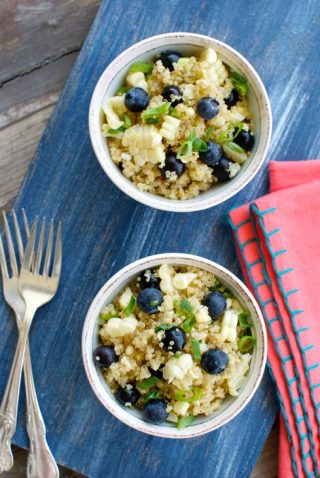
couscous salad

We always hear that we should eat more leafy greens, but preparing them in the same old ways can get boring fast.  Here are some incredibly tasty ways to work more greens into your diet.  My guess is you’ll love these dishes so much, you won’t even realize you’re doing your health a favor!

1. Turn greens into pesto.  In a food processor or blender, whirl together a few big handfuls of any leafy green (really – any green you like) with some lemon juice, garlic, salt, olive oil, and nuts.  You’ve got pesto!  Spread this on sandwiches or wraps; mix it with vinegar or yogurt/mayonnaise for a salad dressing or dip; or add broth or water and use for a pasta sauce or salad dressing.

2.  Add greens to soup.  Most soups taste even better when you had a few cups of chopped greens at the end.  Spinach, kale, chard, arugula, even baby lettuces wilt nicely in just a few minutes and add great texture and flavor, as well as a nutritional boost.

3.  Add greens to pasta or grain salads.  Pasta and rice salads often have too many noodles and not enough flavor.  Next time you make one, chop a few different kinds of greens (again, any kind – but make one a flavorful herb like mint, basil, or arugula) and toss them in.  You’ll get just the added crunch and taste you need to wow your crowd.

4.  Make lasagna or enchiladas with greens.  Saute a huge amount of chopped greens with some chopped onions and garlic until they’re very cooked down.  Let cool and mix with cottage or ricotta cheese and a couple eggs and use this as lasagna filling.  The more greens you add, the healthier your lasagna will be – but you’ll still be enjoying gooey, cheesy pasta!

leafy greens

Don’t forget to vote for my Peanut Butter Pancakes with Chocolate Yogurt Cream!  Vote here and be entered to win a $100 prize pack from Stonyfield and Peanut Butter & Co. – plus receive a $1 off coupon from both companies!

Friday, January 27th, 2012

healthy school lunch

The USDA released new guidelines today to provide school lunches for students across the country.  The changes were made as part of the Healthy, Hunger-Free Kids Act signed into last year, and overall, they do look like a decent improvement.  Check out this before and after lunch menu to get a better idea of what the changes might really mean, and read a little more about the changes here.

*image credit for above: Chicago Magazine, April 2011*

Wednesday, January 25th, 2012

paula deen diabetes

Paula Deen – the self-proclaimed Queen of Butter and Cream Cheese – recently revealed she has Type 2 diabetes.  When I heard the news, I was hardly surprised.  She’s an overweight, inactive adult who eats a high-calorie low-nutrient diet (assuming she eats her own food) — all factors that put her at high risk of health problems.  What did surprise me – and really got me fuming – was that she 1) was diagnosed with diabetes three years ago, and is just now announcing it and 2) is partnering with a drug company on her new “Diabetes in a New Light” campaign.

Seriously?!  Gross.

Despite our culinary and nutritional differences, I have always loved Paula Deen.  She’s an authentic, endearing, and seemingly nurturing woman who looks like she’d be the perfect grandma.  But right now, I’m disappointed.  Such a high profile, loved woman could have been a terrific figurehead for making lifestyle changes to combat disease.  I would never suggest that she give up butter or start making only salads on her show.  Instead, here’s what I think she should have done:

1.  Admit she had adult-onset diabetes earlier.  It’s her personal life, and she can theoretically keep whatever she wants private.  But to hide her condition for three years while she continued to get richer and more famous by encouraging her viewers to eat eat rich, fatty food is just wrong.

2.  Partner with Fruits & Veggies More Matters, or another poorly funded non-profit agency that is tirelessly trying to get Americans to incorporate more fruits and vegetables into their diets – not a drug company.  Paula Deen is already rich, and she doesn’t need a lucrative deal with Novo Nordisk to make ends meet, so here she had a unique opportunity to be a much-needed figurehead for a food group that could actually improve our health if it had any marketing money behind it.  What a wasted opportunity.

To her credit, Paula gives a couple of lifestyle tips in her personal statement (e.g. reducing intake of sweet tea – a useful tip) and has some “lightened” recipes on her website now (but who wants to eat lasagna with fat-free cheese and reduced-carb noodles?  Not me.), but in many ways it seems like she’s missing the point: Type 2 Diabetes is a lifestyle-related disease.  If you replace some of what you’re eating with vegetables and fruits, get a little more active, and thus drop some excess pounds, you can manage or even reverse your disease.  You can still enjoy food, and you’ll likely have more energy to enjoy the other parts of your life.  And you won’t need drugs.

I wish Paula Deen would have seized this opportunity to invite Americans to join her in changing their lifestyle habits to achieve better health.

*Image credit: pauladeen.com*

Monday, January 23rd, 2012

roasted red pepper soup

Tomatoes and bell peppers are summer veggies, but this soup offers a great way to enjoy them during winter — you only need canned tomatoes and jarred red peppers.  Plus, the soup is simple and quick to prepare, so you’ll have a hot flavorful meal on the table in less than 30 minutes!

roasted red pepper soup

Roasted Red Pepper and Tomato Soup

1 medium onion, chopped

2 Chipotle peppers canned in adobo sauce, finely chopped

1/2 cup white or red wine

Two 12-oz jars roasted red peppers, drained well and chopped

1 28-oz can diced fire roasted tomatoes

1 14-oz can diced tomatoes of any kind

1-2 cups water

1/2 cup heavy cream (I never use cream, but it’s worth it here!)

Salt to taste

Instructions:

Heat a heavy bottomed pot (like a Dutch oven) over medium heat.  Add a generous drizzle of olive oil (1-2 Tbsp) and the onions and saute for 5-7 minutes or until onions are soft and translucent.  Sprinkle with a little salt (1/4 tsp) then stir in the wine and Chipotle peppers.  Let the wine evaporate (2-3 minutes) then add the roasted red peppers, canned tomatoes, and water and let simmer for 15 minutes.  Remove the pot from the heat and blend using an immersion blender (aka hand blender) until the soup is a smooth consistency.  Stir in the cream and serve with a dollop of yogurt on top, if desired.  FYI: this soup is spicy!  If you prefer mild tastes, add only one Chipotle pepper.

Perfect with a warm piece of cornbread!

roasted red pepper soup

Saturday, January 21st, 2012

baby finger food

Ever since Lucy developed her “pincher grasp” a few weeks ago, she is all about finger food.  I can still occasionally feed her a bite of something off a spoon, but most of the time I’m brainstorming ways to give her balanced meals in finger-food form.  This takes some thinking, because she’s not a great chewer yet (despite her 6 teeth), so everything has to be soft and small in case it gets swallowed whole.

baby finger foods

Since many moms are in the same boat, I thought I’d share some of Lucy’s favorite finger foods, and would love to hear your baby finger food go-to’s too!

Great baby finger foods:

Organic frozen peas (thawed and cooked)

Small pieces of ripe pear

Sweet potato and butternut squash chunks

Freeze dried strawberries, broken into smaller pieces

Puffed kamut or rice

Rotisserie chicken (they have organic ones at Whole Foods!) bits

Cooked ground turkey (I brown mine with some dried thyme & oregano for flavor)

Bits of bread and cheddar or Mozzarella cheese…because who doesn’t love this combo?!

baby finger foods

baby finger food

What are your baby’s favorite finger foods?  I think all moms are in need of more ideas!

Friday, January 20th, 2012

Before you polish off that next handful of cheese-flavored Goldfish, Chex Mix, or Doritos, you may want to take a closer look at the ingredients list.  See anything like “autolyzed yeast,” “hydrolyzed soy protein,” or “glutamate?”  If so, the product contains an MSG-equivalent.  These additives are not labeled as monosodium glutamate (true MSG), but they are essentially the same thing.

Are these additives bad? 

Depends on who you ask.  The FDA, World Health Organization, and Food & Agriculture Organization of the United Nations concluded many years ago that MSG and other synthetically produced glutamates are not harmful.  Yet some scientists insist that glutamates do have negative effects on health, and should be avoided.

Why do food companies add MSG?

Its a flavor booster, especially for cheese and ranch flavored products.  It provides the super intense, salty, “umami” flavor that makes our snack foods highly tasty.

What kinds of foods have MSG or its equivalents?

Too many to list, really.  Many packaged salty snack foods, chicken and vegetable broths, sauces and flavorings, some low-fat yogurts, even some canned tuna.  You can bet that any cheese or ranch-flavored snack product probably has hydrolyzed soy protein or autolyzed yeast, or both.

Should I avoid foods with glutamates?

This is a good time to recall two of Michael Pollan’s recommendations in his book Food Rules:

1. Eat mostly plants, not food that was made in a plant.

2. You can eat whatever you want, as long as you make it yourself.  (The idea here is how often would you expend the time and energy to make your own French fries, cream puffs, or Goldfish crackers from scratch? Not very often.  But on that note, check out this cool homemade Goldfish cracker recipe).

Another way to put it: as long as most of the foods you eat are whole foods – veggies, fruits, whole grains, beans, nuts, sustainably-raised meats and fish, organic dairy – you don’t need to worry about eating the occasional glutamate-containing processed food (unless you notice it gives you unpleasant symptoms).

image credit: Tony Cenicola, New York Times, March 2008

Wednesday, January 18th, 2012